

The science of gravel crushing extends far beyond simple size reduction—it's an intricate dance of particle distribution that determines the structural integrity and longevity of countless construction projects. Gradation, the often-overlooked characteristic describing the size distribution of crushed materials, wields surprising influence over everything from asphalt pavement durability to concrete workability. When gravel crusher operators master the relationship between machine settings and particle size distribution, they unlock the potential to produce materials that meet exacting specifications while optimizing equipment efficiency.
Modern crushing operations can no longer afford to view gradation as a secondary consideration. The difference between well-graded and poorly-graded gravel manifests in pavement that cracks prematurely versus roads that withstand decades of heavy traffic. It appears in concrete that requires excessive water content versus mixes that achieve perfect consolidation. As infrastructure demands grow more sophisticated, understanding how crusher adjustments affect gradation becomes not just beneficial, but essential for producing high-performance aggregates.
Gradation exists on a spectrum from uniformly sized particles to well-graded distributions containing a balanced mix of coarse and fine fractions. Single-stage crushing typically yields a more uniform output, while multi-stage processes with careful screen selection can create the interlocking particle matrix prized in base materials. The optimal gradation curve varies by application—what serves perfectly for drainage layers would prove disastrous in asphalt production.

Crusher settings dramatically influence these outcomes. Closed-side settings on cone crushers determine the minimum particle size, while stroke frequency affects the proportion of fines. Jaw crusher discharge openings control top size, but the crushing action's inherent characteristics govern how material breaks along fracture planes. Modern plants utilize particle size analyzers to provide real-time feedback, allowing operators to fine-tune these parameters for precise gradation control.
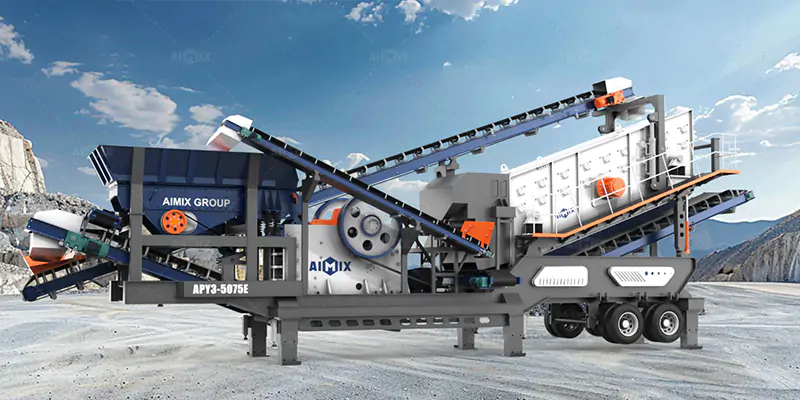
Not all crushers create equal gradation profiles. Jaw crushers produce more angular particles with a wider size distribution—ideal for base materials needing good interlock. Cone crushers, particularly those with multi-zone crushing chambers, excel at producing cubical particles with controlled top sizes. Impact crushers generate higher fines content naturally, making them preferable for asphalt aggregate production where stone-on-stone crushing creates the desired microfractured surfaces.
Secondary and tertiary crushing stages introduce opportunities to shape the gradation curve intentionally. Strategic screen selection between stages removes desired fractions before further reduction, preventing over-crushing of smaller particles. Some advanced plants employ air classifiers to separate fines before final crushing, preserving the integrity of larger particles while still meeting overall gradation specifications. This level of control separates adequate crushing operations from exceptional ones.
The consequences of gradation choices materialize in finished products. In asphalt pavements, proper gradation ensures stone-on-stone contact that carries loads while the binder-rich fines provide flexibility. Deviations cause either unstable mixes that rut or brittle ones that crack. Concrete aggregates demand careful balance—too many fines increase water demand, while gap-graded distributions hinder workability and consolidation.
Base materials rely on gradation for compaction efficiency and load distribution. Well-graded crushed stone achieves 95% compaction with less effort than uniform materials, and its interlocking structure distributes loads across more particle contact points. Railroad ballast requires specific gradation to allow drainage while preventing track movement. Each application speaks to the importance of aggregate crusher operators understanding not just how to reduce size, but how to craft precise particle distributions.
Mastering gradation-aware crushing techniques transforms aggregate production from a commodity service to a value-added process. Operators who can consistently deliver materials with engineered particle distributions position themselves as partners in quality construction rather than mere material suppliers. As infrastructure standards rise globally, this knowledge becomes the differentiator between those who simply crush rock and those who create precisely tailored construction solutions. The gravel underfoot may seem humble, but its gradation tells a story of careful planning and technical expertise that supports the structures we depend on daily.
