

Concrete pumps have undergone significant transformation since their inception, playing a pivotal role in revolutionizing construction workflows. Historically, the journey of concrete pump technology began with rudimentary manual techniques, evolving over decades into sophisticated machinery that seamlessly integrates with modern construction practices. The advent of hydraulic systems in the mid-20th century marked a watershed moment, drastically improving the efficiency and range of concrete placement. This progression continued with the incorporation of advanced materials and computerized controls, culminating in the highly efficient and versatile pumps seen today. These modern innovations not only enhance operational efficiency but also significantly reduce the physical strain on workers, underscoring the symbiotic relationship between technology and human labor in construction.
Today's concrete pumps are marvels of engineering, characterized by advanced features such as remote control operation, high-pressure output, and self-cleaning mechanisms. These innovations have significantly elevated the efficiency of concrete placement, reducing the time and labor required for construction projects. The integration of GPS and telemetry systems allows for real-time monitoring and optimization, ensuring that concrete delivery is both precise and timely. Furthermore, the development of eco-friendly pumps that use less water and produce fewer emissions reflects the industry's commitment to sustainability. These advancements not only improve project outcomes but also contribute to a safer and more sustainable construction environment.

Concrete pumps are integral to fostering collaborative jobsite ecosystems by streamlining workflows and mitigating common bottlenecks. By enabling precise and continuous concrete placement, pumps minimize the need for labor-intensive manual handling, thereby expediting project timelines. This efficiency translates to more predictable scheduling, allowing for better coordination among different trades and subcontractors. The ability to place concrete quickly and accurately reduces delays caused by traditional methods, ensuring that subsequent construction activities can proceed without interruption. As a result, the overall project timeline is shortened, and the risk of costly overruns is minimized.
The use of concrete pumps facilitates clearer communication channels on the jobsite. As the operation of these pumps often necessitates a coordinated effort among machine operators, site supervisors, and laborers, it inherently promotes a culture of teamwork and synchronized efforts. This dynamic interplay not only enhances productivity but also fosters a sense of collective responsibility and cohesion among the workforce. Effective communication is essential for ensuring that concrete is placed correctly and that any potential issues are addressed promptly. By enhancing collaboration, small concrete pumps contribute to a more efficient and harmonious jobsite environment, where each team member is aware of their role and responsibilities.
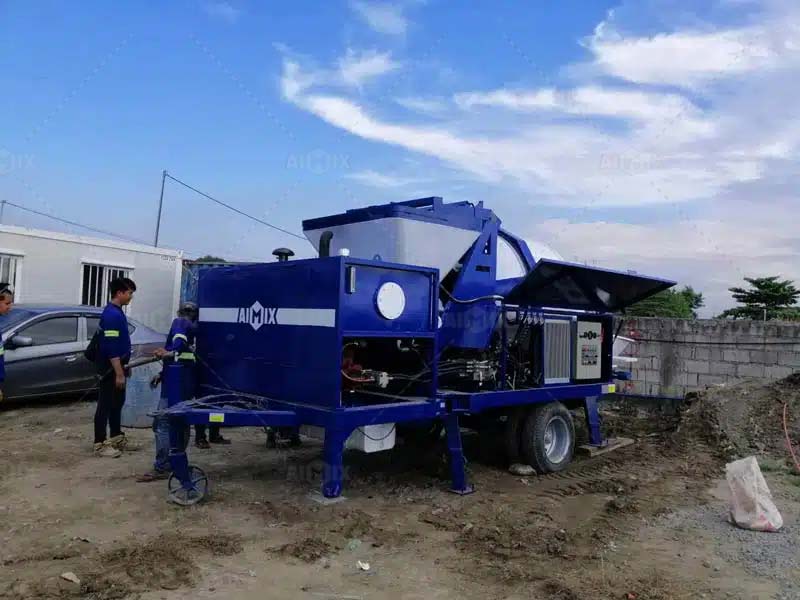
Looking ahead, the future of concrete pump technology is poised for further innovation and challenges. Emerging technologies such as autonomous pumps, advanced sensor integration, and real-time data analytics hold the potential to revolutionize jobsite operations even further. These advancements promise to elevate precision, reduce waste, and enhance safety, offering substantial benefits to the construction industry. Autonomous pumps, for instance, could operate continuously with minimal human intervention, significantly increasing productivity. Advanced sensors could detect and adapt to varying conditions in real time, ensuring optimal performance and quality. These technologies represent a significant leap forward in the efficiency and effectiveness of concrete placement. Choose AIMIX concrete pump with advanced technology, learn more details here: https://aimixconcretesolution.com/.
However, these technological strides come with their own set of challenges. Environmental concerns, such as the carbon footprint of concrete production and the sustainability of pump operation, require concerted efforts to address. The construction industry must explore ways to reduce the environmental impact of concrete pumping, such as using alternative materials or improving energy efficiency. Additionally, logistical challenges, including the transportation and maintenance of sophisticated machinery, demand innovative solutions to ensure seamless integration into jobsite workflows. Balancing these emerging technologies with sustainable practices and logistical efficiency will be crucial in shaping the future landscape of concrete pumping and its role in collaborative construction ecosystems. As the industry continues to evolve, addressing these challenges will be essential to maximizing the benefits of concrete pump technology.
